| Home > Browse Our Collection > Computers > Commodore > Commodore Amiga A500 Class of the 90s Pack |
|
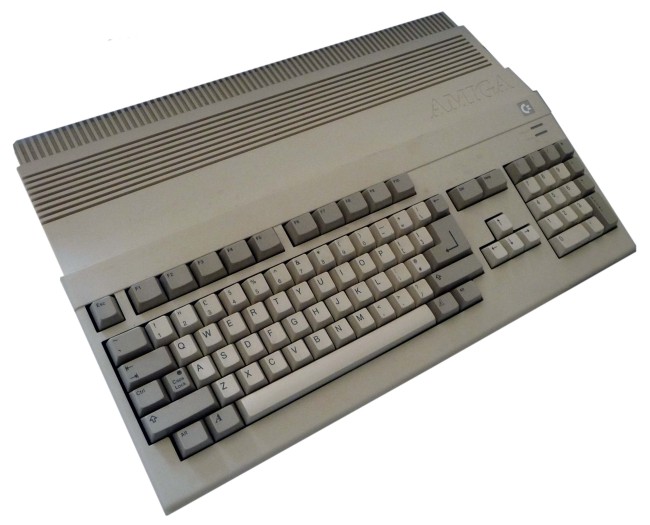
The Amiga 500, also known as the A500 (or its code name 'Rock Lobster'), was the first "low-end" Commodore Amiga 16/32-bit multimedia home/personal computer. It was announced at the winter Consumer Electronics Show in January 1987, at the same time as the high-end Amiga 2000, and competed directly against the Atari 520ST. Before the A500 was shipped Commodore suggested that the list price of the A500 was 595.95 USD without a monitor. At delivery in 1987, Commodore announced that the Amiga 500 would carry a 699 USD list price. The Amiga 500 represented a return to Commodore's roots, being sold in the same mass retail outlets as the Commodore 64 to which it was a spiritual successor, as opposed to the computer store-only Amiga 1000. The original A500 proved to be Commodore’s best-selling Amiga model, enjoying particular success in Europe. Although popular with hobbyists, arguably its most widespread use was as a gaming machine, where its advanced graphics and sound for the time were of significant benefit.
In October 1989, the A500 dropped its price from 499 GBP to 399 GBP and was bundled with the Batman Pack in the United Kingdom. This price drop helped Commodore to sell more than 1 million A500s in 1989. In late 1991, an enhanced model known as the A500 Plus replaced the standard A500 Release date 1987
Manufacturer: Commodore Comment on This Page Commodore Amiga A500 Class of the 90s Pack Manuals:
Magazines RELATED to Commodore Amiga A500 Class of the 90s Pack in our Library
Catalogues RELATED to Commodore Amiga A500 Class of the 90s Pack in our Library
Other Systems Related To Commodore Amiga A500 Class of the 90s Pack:This exhibit has a reference ID of CH50155. Please quote this reference ID in any communication with the Centre for Computing History. |
Click on the Image(s) For Detail 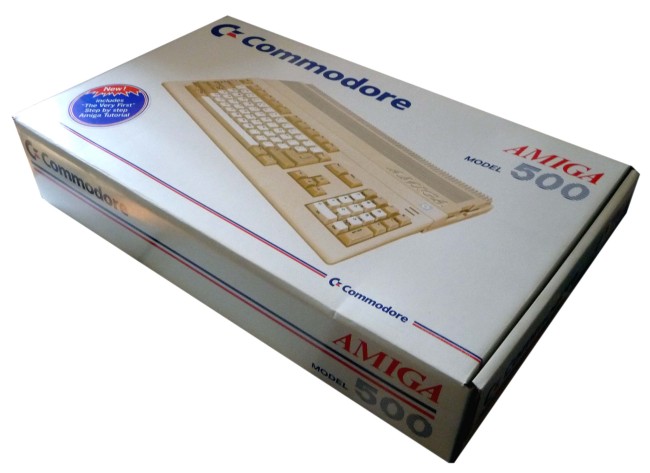
Related Video
|
| © The Centre for Computing History - Computer Museum | Web Design : Pure Energy | Powered By SiteWise |