
Computing Books published by Addison-Wesley
The following is a list of Computing Books published by Addison-Wesley in the Centre for Computing History collection. It is not an exhaustive list of and other books may have been published. If you have a book that you would like to donate to our collection, please view our donations page.There are 29 Computing Books published by Addison-Wesley in our collection :
| Order By : Title - Release Date - Publisher |
 Date: April 1987
A Little Smalltalk
Date: April 1987
A Little Smalltalk
Budd's introduction to Smalltalk programming and the Little Smalltalk interpreter focuses on elementary, rather than advanced topics of object-oriented programming. The Little Smalltalk system runs under the UNIX operating system and can be executed on conventional terminals.
Publisher: Addison-Wesley
Author: Timothy Budd
Platform: Smalltalk
 Date: 1986
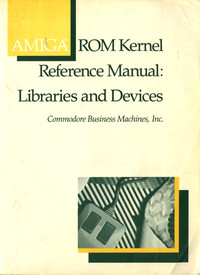
Amiga ROM Kernel Reference Manual: Libraries and Devices
Date: 1986
Amiga ROM Kernel Reference Manual: Libraries and Devices
"...a detailed introduction to and description of the hundreds of graphics, animation, text, math and audio routines that make up the Amiga ROM"
Publisher: Addison-Wesley
Author: Rob Peck
Platform: Commodore Amiga
 Date: 1975
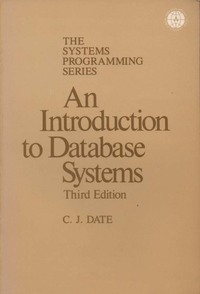
An Introduction To Database Systems
Date: 1975
An Introduction To Database Systems
(Systems Programming Series)
Keywords: systems, programming, base, data, introduction
Language: English
Category: Mathematics, Science & Math,
Kindly donated by Julian Bryant
Publisher: Addison-Wesley
Author: C.J. Date
Platform: Database
 Date: 1975
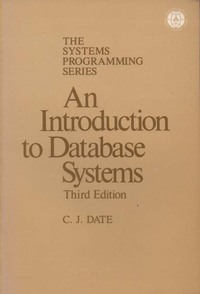
An Introduction To Database Systems
Date: 1975
An Introduction To Database Systems
(Systems Programming Series)
Keywords: systems, programming, base, data, introduction
Language: English
Category: Mathematics, Science & Math,
Kindly donated by Julian Bryant
Publisher: Addison-Wesley
Author: C.J. Date
Platform: Database
 Date: 1987
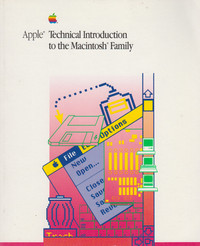
Apple Technical Introduction to the Macintosh Family
Date: 1987
Apple Technical Introduction to the Macintosh Family
Apple Technical Introduction to the Macintosh Family for the Apple Macintosh
With the introduction of the second generation of Apple® Macintosh® computers, the Macintosh SE and the Macintosh II, Apple has broadened the definition of the Macintosh system with two open machines. These machines add significant new capabilities to the Macintosh family, at the same time fitting well within the flexible Macintosh software architecture. This book describes that software architecture, as well as the hardware architectures of the various Macintosh machines.
About this book
Technical Introduction to the Macintosh Family introduces the hardware and software design of the Macintosh family of computers and serves as a starting point to the Macintosh technical documentation. The discussion is primarily oriented toward the Macintosh Plus, Macintosh SE, and Macintosh II computers, but it also touches on earlier versions of the Macintosh where these differ from the Macintosh Plus. The information in this book can provide a starting point for programmers, particularly those who are new to the Macintosh. This book can also serve as a stand-alone handbook for technically minded users and system administrators.
Note that this book will not tell you how to write a Macintosh application. That task is undertaken by a second short volume, Programmer's Introduction to the Macintosh Family.
In describing the architecture of the Macintosh system, this book follows an "outside-in" plan, beginning with the parts of the system seen by the user and proceeding to the lower-level details of the Operating System and the hardware:
o Chapters 1 and 2 introduce the basic pieces of the system hardware and software.
o Chapter 3 describes the graphical, window-based interface that the Macintosh presents to the user, beginning with a discussion of how mouse and keyboard actions are interpreted.
o Chapter 4 expands upon the discussion of this interface by describing resources, specially formatted chunks of data that are used to store user interface elements such as menus, windows, and icons.
o Chapters 5 through 8 describe other elements of the Macintosh software-graphics, the Macintosh Finder and system software, the Macintosh's use of memory, and files.
o Chapter 9 finishes the discussion of the Macintosh software by describing the low-level stuff of the Macintosh Operating System: the managers and device drivers that talk directly to the computer's hardware.
o Chapter 10 describes the hardware itself, contrasting the Macintosh Plus, the Macintosh SE, and the Macintosh IL
o Chapter 11 concludes the book by outlining the A!UX® operating system, Apple's implementation of the AT&T UNIX® Operating System for the Macintosh IL
This book surveys only the surface of the Macintosh hardware and software. If this book were presented interactively, as a piece of Macintosh software, it would represent no more than the Macintosh desktop, where each item could be doubleclicked to reveal many deeper levels of information. You can find these deeper levels of information in the other volumes of the Inside Macintosh Library.
Publisher: Addison-Wesley
Author: Apple
Platform: Apple Macintosh
 Date: 2000
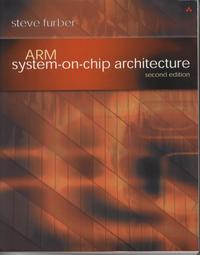
ARM system-on-chip architecture second edition
Date: 2000
ARM system-on-chip architecture second edition
second edition.
Publisher: Addison-Wesley
Author: Steve Furber
Platform:
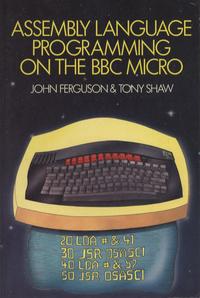 Date: 1983
Assembly Language Programming on the BBC Micro
Date: 1983
Assembly Language Programming on the BBC Micro
Publisher: Addison-Wesley
Author: John Ferguson & Tony Shaw
Platform: BBC Micro
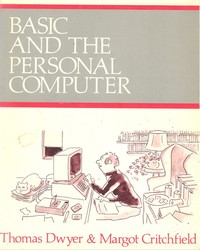 Date: 1978
BASIC and the Personal Computer
Date: 1978
BASIC and the Personal Computer
Publisher: Addison-Wesley
Author: Thomas Dwyer & Margot Critchfield
Platform: BASIC
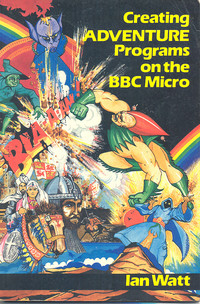 Date: 1983
Creating Adventure Programs on the BBC Micro
Date: 1983
Creating Adventure Programs on the BBC Micro
Publisher: Addison-Wesley
Author: Ian Watt
Platform: BBC Micro
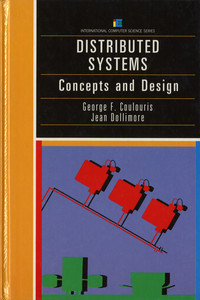 Date: 1988
Distributed Systems: Concepts and Design
Date: 1988
Distributed Systems: Concepts and Design
Distributed Systems: Concepts and Design is a book written by George Coulouris and Jean Dollimore. This first edition of the book was published in 1988 by Addison-Wesley Publishing Company.
Publisher: Addison-Wesley
Author: George Coulouris, Jean Dollimore
Platform:
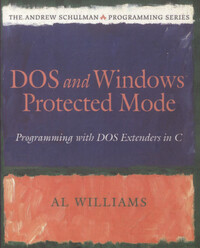 Date: December 1992
DOS and Windows Protected Mode
Date: December 1992
DOS and Windows Protected Mode
DOS and Windows Protected Mode - Programming with DOS Extenders in C
This book contains advice on writing applications that take advantage of popular MS-DOS extenders (software which ups the amount of memory DOS can drawn on).
It is a part of The Andrew Schulman Programming Series.
From the back of the book:
'Section one is an introduction to the world of DOS extenders, including discussion of what an extender is, why you'd use one, and which ones are available.
Section two contains many programming examples and focuses on the technical aspects of DOS extenders, including protected-mode pointers, interrupt handling, DPMI calls, and virtual memory.
Section three analyses fully-functional extender programs including a disk duplication program, a graphics program, and a server than enables DOS and Windows programs to communicate with each other.'
First printing.
Publisher: Addison-Wesley
Author: Al Williams
Platform: MS-DOS
 Date: September 1985
Excel - Business Solutions for the Macintosh
Date: September 1985
Excel - Business Solutions for the Macintosh
Excel Business Solutions for the Macintosh for Apple Macintosh
Micro Computer Books
Publisher: Addison-Wesley
Author: Richard Loggins
Platform: Apple Macintosh
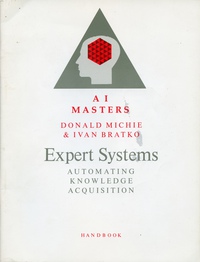 Date: 1986
Expert Systems: Automating Knowledge Acquisitions
Date: 1986
Expert Systems: Automating Knowledge Acquisitions
Publisher: Addison-Wesley
Author: Donald Michie, Ivan Bratko
Platform:
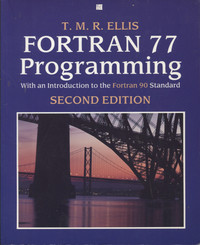 Date: 1990
FORTRAN 77 Programming
Date: 1990
FORTRAN 77 Programming
"This new edition of the popular introduction to FORTRAN 77 has been fully revised to meet the needs of the programmers of the 1990s. A special feature of this edition is its extensive coverage of the new Fortran 90 standard."
Publisher: Addison-Wesley
Author: T. M. R. Ellis
Platform: Fortran
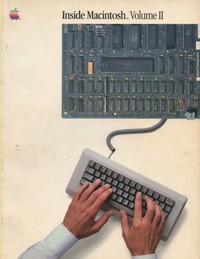 Date: 1st January 1985
Inside Macintosh: Volume II
Date: 1st January 1985
Inside Macintosh: Volume II
Inside Macintosh, Volume 2 Volume II for Apple Macintosh
Inside Macintosh series is the Apple developer documentation manuals for the APIs (Application Program Interfaces) and machine architecture of the Macintosh computer.
Volumes 1 to 6. (I to VI)
Kindly donated by Neil Hubbard
Publisher: Addison-Wesley
Author: Apple
Platform: Apple Macintosh
 Date: 1st January 1985
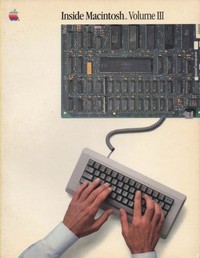
Inside Macintosh: Volume III
Date: 1st January 1985
Inside Macintosh: Volume III
Inside Macintosh, Volume 3 Volume III for Apple Macintosh
Inside Macintosh series is the Apple developer documentation manuals for the APIs (Application Program Interfaces) and machine architecture of the Macintosh computer.
Volumes 1 to 6. (I to VI)
Kindly donated by Neil Hubbard
Publisher: Addison-Wesley
Author: Apple
Platform: Apple Macintosh
 Date: 1st February 1988
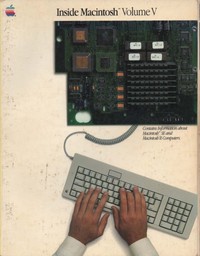
Inside Macintosh: Volume V
Date: 1st February 1988
Inside Macintosh: Volume V
Inside Macintosh, Volume 5 Volume V for Apple Macintosh
Inside Macintosh series is the Apple developer documentation manuals for the APIs (Application Program Interfaces) and machine architecture of the Macintosh computer.
Volumes 1 to 6. (I to VI)
Kindly donated by Neil Hubbard
Publisher: Addison-Wesley
Author: Apple
Platform: Apple Macintosh
 Date: 1st April 1991
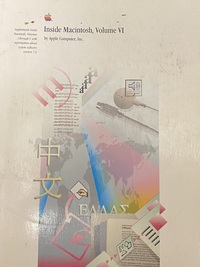
Inside Macintosh: Volume VI
Date: 1st April 1991
Inside Macintosh: Volume VI
Inside Macintosh, Volume 6 Volume VI for Apple Macintosh
Inside Macintosh series is the Apple developer documentation manuals for the APIs (Application Program Interfaces) and machine architecture of the Macintosh computer.
Volumes 1 to 6. (I to VI)
Kindly donated by Neil Hubbard
Version 7
Publisher: Addison-Wesley
Author: Apple
Platform: Apple Macintosh
 Date: 1984
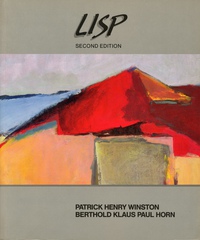
LISP (second edition)
Date: 1984
LISP (second edition)
LISP is a book written by Patrick Henry Winston and Berthold Klaus Paul Horn. This second edition was published in 1984 by Addison-Wesley Publishing Company.
Publisher: Addison-Wesley
Author: Henry Winston, Berthold Klaus Paul Horn
Platform:
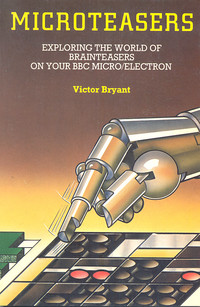 Date: 1984
Microteasers
Date: 1984
Microteasers
Exploring the World of Brainteasers on your BBC Micro/Electron
Publisher: Addison-Wesley
Author: Victor Bryant
Platform: BBC Micro
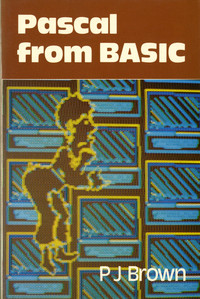 Date: 1982
Pascal from BASIC
Date: 1982
Pascal from BASIC
"Most books on Pascal assume the reader does not know how to program, yet the majority of people learning Pascal already know BASIC. For them the task is not to learn programming form scratch but to realign their thinking on the subject."
Publisher: Addison-Wesley
Author: P J Brown
Platform: None
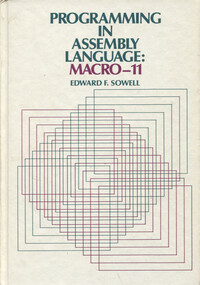 Date: May 1984
Programming In Assembly Language: Macro-11
Date: May 1984
Programming In Assembly Language: Macro-11
Here is an introduction to assembly and machine language programming for the PDP-11 that provides several important, innovative features:
- It introduces standard control structures for structured programming.
- It uses ODT.
- It includes extensive material on RSTS, the UNIX system, and other operating systems.
- It provides information on four text editors.
- It provides an example of a large modular program.
Publisher: Addison-Wesley
Author: Edward F. Sowell
Platform: MACRO-11
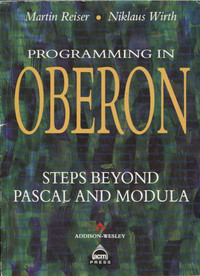 Date: 1992
Programming in Oberon
Date: 1992
Programming in Oberon
Publisher: Addison-Wesley
Author: Martin Reiser & Niklaus Wirth
Platform:
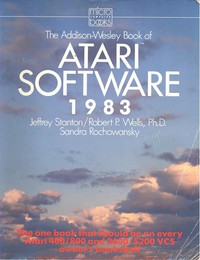 Date: 1983
The Addison-Wesley Book of Atari Software 1983
Date: 1983
The Addison-Wesley Book of Atari Software 1983
Publisher: Addison-Wesley
Author: Jeffrey Stanton/Roberta P wells Ph.D, Sandra Rochowansky
Platform: Atari ST
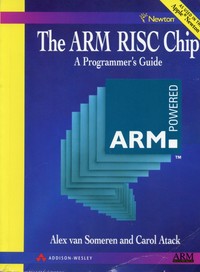 Date: 1993
The ARM RISC Chip - A Programmers Guide
Date: 1993
The ARM RISC Chip - A Programmers Guide
Consuming less power than a small flashlight but with the might of a desktop computer, the processors designed by Advanced RISC Machines Ltd (ARM) are the revolutionary chips at the heart of mant of the new hand-held person digital assistants (PDA), including the Apple Newton.
If you are a programmer or systems software engineer looking for the definitive programmer's guide and reference to the ARM architecture, then this is the book for you.
Publisher: Addison-Wesley
Author: Alex van Someren, Carol Atack
Platform: ARM RISC
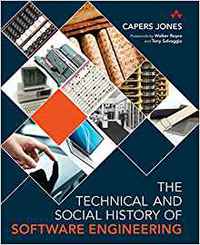 Date: 26th November 2013
The Technical and Social History of Software Engineering
Date: 26th November 2013
The Technical and Social History of Software Engineering
Capers Jones’s book is a monumental history of computers and computing with a prime focus on ‘software engineering’. Jones has an introductory chapter which deals with the pre-history from the beginning of civilisation to 1930, then chapters dealing with each decade up to 2013. His chapter on the 1950s includes the LEO Computers story, brief (pages 85, 86, in a 452 page book), but giving some weight to the place of LEO in computing history.
Publisher: Addison-Wesley
Author: Capers Jones
Platform:
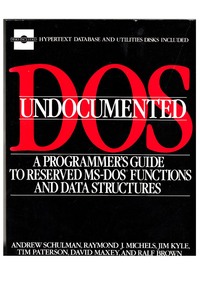 Date: October 1990
Undocumented DOS: A Programmer's Guide to Reserved MS-DOS Functions and Data Structures
Date: October 1990
Undocumented DOS: A Programmer's Guide to Reserved MS-DOS Functions and Data Structures
This programming manual includes instructions for MS-DOS that were left undocumented by Microsoft.
From the back of the book:
'The powerful DOS programming functions undocumented by Microsoft - finally revealed in Undocumented DOS!
Since MS-DOS was first released, over 100 function calls have been listed as "reserved" by Microsoft; leaving inquiring programmers to prowl electronic bulletin boards and programming journals for information... Undocumented DOS puts all the power of reserved functions and data structures at your disposal.'
First printing.
Publisher: Addison-Wesley
Author: Andrew Schulman, Raymond J. Michels, Jim Kyle, Tim Paterson, David Maxey, Ralf Brown
Platform: DOS
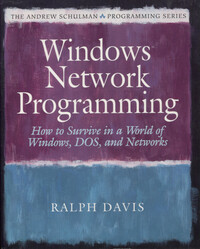 Date: December 1992
Windows Network Programming - How to Survive in a World of Windows, DOS, and Networks
Date: December 1992
Windows Network Programming - How to Survive in a World of Windows, DOS, and Networks
A detailed programming manual discussing the of use of networks in Windows 3.1.
First printing. Part of the Andrew Schulman Programming Series.
Publisher: Addison-Wesley
Author: Ralph Davis
Platform: MS-DOS, Windows 3.1
 Date: 1985
Writing and Computers
Date: 1985
Writing and Computers
Writing and Computers considers both the benefits and problems of using computers in the writing process.
Publisher: Addison-Wesley
Author: Colette Daiute
Platform: Writing