IBM introduces the PS/2 series of computers

2nd April 1987
IBM introduces the PS/2 series of computers

On the 2nd April 1987, IBM announced PS/2 (Personal System/2), a new series of personal computers. The PS/2 was IBM's follow-up to the PC, PC/XT, and PC/AT machines.

Most PS/2 models used the Micro Channel Architecture (MCA), a bus format incompatible with IBM's open Industry Standard Architecture (ISA) bus which had been adopted by many manufacturers.

IBM released a new operating system, OS/2, at the same time, allowing the use of a mouse with IBM computers for the first time.

At launch, the PS/2 range contained four models:

  • Model 30. Based on an Intel 8086 CPU, the Model 30 lacked features present in other PS/2 models such as the MCA. It also provided MCGA graphics rather than VGA.
  • Model 50. Based on an Intel 80286 CPU, with 16-bit MCA, VGA, and a 20MB hard drive.
  • Model 60. Based on an Intel 80286 CPU, with 16-bit MCA, VGA, and a 44MB or 70MB hard drive.
  • Model 80. Based on an Intel 80386 CPU, with 32-bit MCA, VGA, and a 44MB to 320MB hard drive.

In September 1988, 18 months after the introduction of the new range, IBM reported sales of 3 million PS/2 machines.

Related information:

Image:

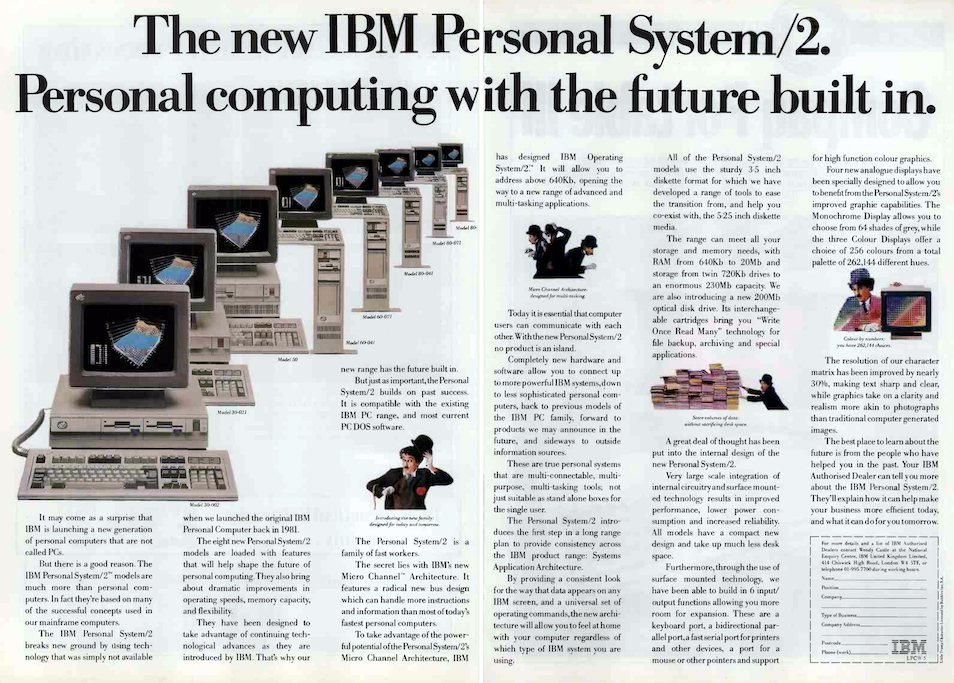
  • IBM PS/2 advert, Personal Computer World, June 1987
    Credit: IBM. Images remain the copyright of the original copyright holder. Used under fair use policy for educational purposes only.


Related Items in the Collection:


IBM introduces the PS/2 series of computers

Click on the Images
For Detail


Heritage Lottery Funded
Heritage Lottery Fund
Accredited Museum